Five Home Repairs Every Renter and Homeowner Should Know
Five small repairs make up a huge share of the call-outs people pay for. Each one takes under an hour, needs tools costing less than a single trade visit, and gets easier the second time you do it.
None of these involve gas, mains wiring or structural work — those need a professional, always.
What you'll need
- Filler and a putty knife
- A plunger and a drain snake
- An adjustable wrench and a screwdriver set
- A drill, wall plugs and appropriate screws
- A stud finder and a spirit level
1. Patch a hole in the wall
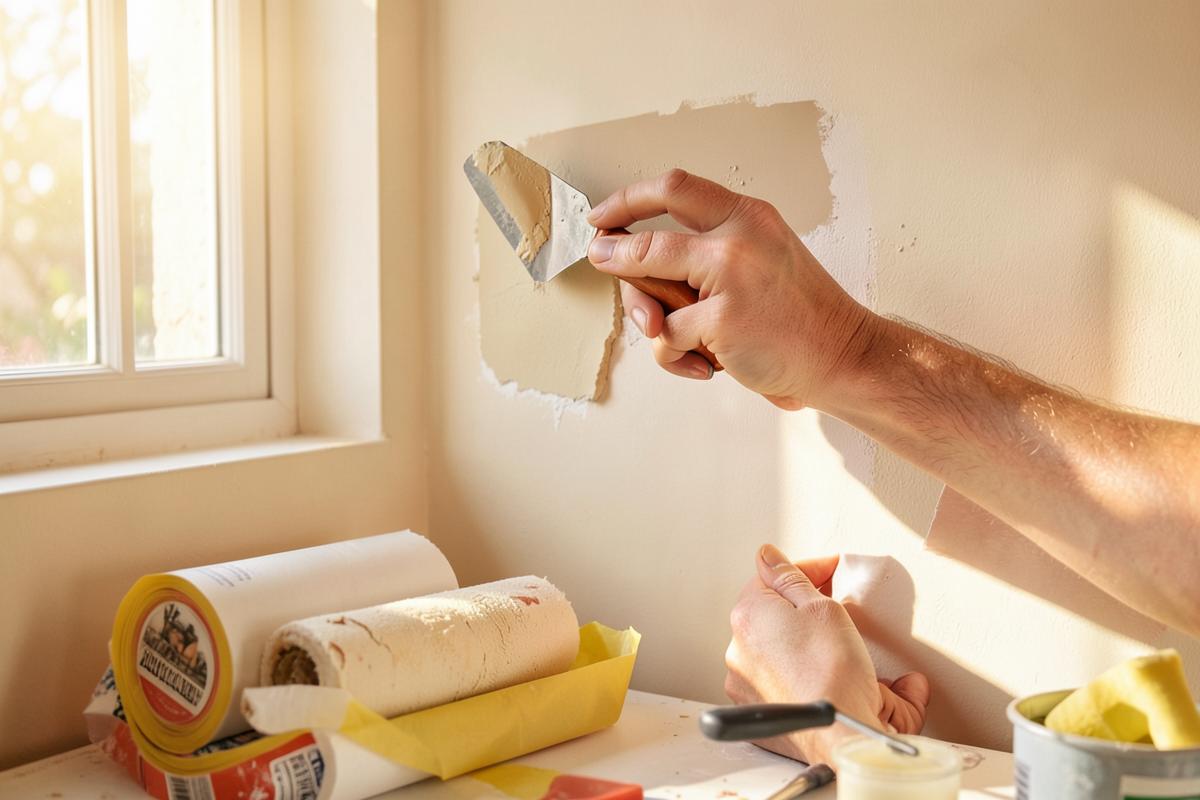
For anything smaller than a coin, press filler in with a putty knife, scrape it flush, let it dry, then sand smooth. Larger holes need a self-adhesive mesh patch behind the filler so it has something to grip. Apply thin coats — one thick coat cracks as it dries, and it will take longer to fix than doing it properly twice.
- 1Scrape away loose edges and dust the hole out.
- 2Press filler in, slightly proud of the surface.
- 3Let it dry fully, sand flat with fine paper.
- 4Prime the patch before painting, or it'll show through as a dull spot.
2. Unblock a slow drain without chemicals
Chemical drain cleaners damage pipes and rarely solve the real cause, which is usually a clump of hair and soap just below the plughole. Remove the plug, pull out what you can with a drain snake or a bent wire hook, then flush with a kettle of hot (not boiling) water.
For a stubborn sink, put a cloth in the overflow hole so your plunger actually builds pressure, then plunge firmly ten or fifteen times.
Tip: If both a sink and a toilet back up at once, stop — that's a main drain problem, not a local blockage, and it needs a professional.
3. Fix a running toilet
A toilet that trickles constantly can waste hundreds of gallons a week. Take the cistern lid off and watch. If water is running into the overflow pipe, the fill valve is set too high — adjust the float down. If the water level is fine but it still runs, the flapper or seal at the bottom has perished; they're a few pounds and swap out by hand in ten minutes with the water shut off.
4. Silence a squeaky door or floorboard
For a door, lift the hinge pin halfway, wipe on a little grease or petroleum jelly, and tap it back. Spray lubricants work briefly and then attract dust. For a squeaking floorboard, find the joist beneath it and drive a screw down through the board into the joist — countersink the head and fill over it.
5. Hang something heavy so it stays up
Most things fall off walls because they were screwed into plasterboard with nothing behind them. Use a stud finder to locate the timber studs, usually 16 or 24 inches apart, and screw into those wherever you can. Where you can't, use proper hollow-wall anchors rated for the weight, not the little plastic plugs that came in the box.
- 1Find and mark the studs.
- 2Mark your fixing points and check them with a spirit level.
- 3Drill a pilot hole slightly narrower than the screw.
- 4Fit the anchor if you're not in a stud, then drive the screw.
- 5Test the fixing with a firm pull before hanging anything valuable.
When to stop and call someone
Anything involving gas, mains electrics, structural walls, or water you can't shut off is a professional job. So is any repair where you'd be working at height on a ladder alone. Knowing the boundary is part of being good at DIY, not a failure of it.
Common mistakes to avoid
- Applying filler in one thick layer.
- Reaching for chemical drain cleaner first.
- Hanging heavy items on plastic plugs in plasterboard.
- Not turning off the water before starting a plumbing fix.
Want someone to show you?
Hold your phone up to the problem and let someone who's fixed it a hundred times talk you through it. Kindlio teachers do live repair walk-throughs.


