Container Gardening for Beginners: Grow Food in Pots
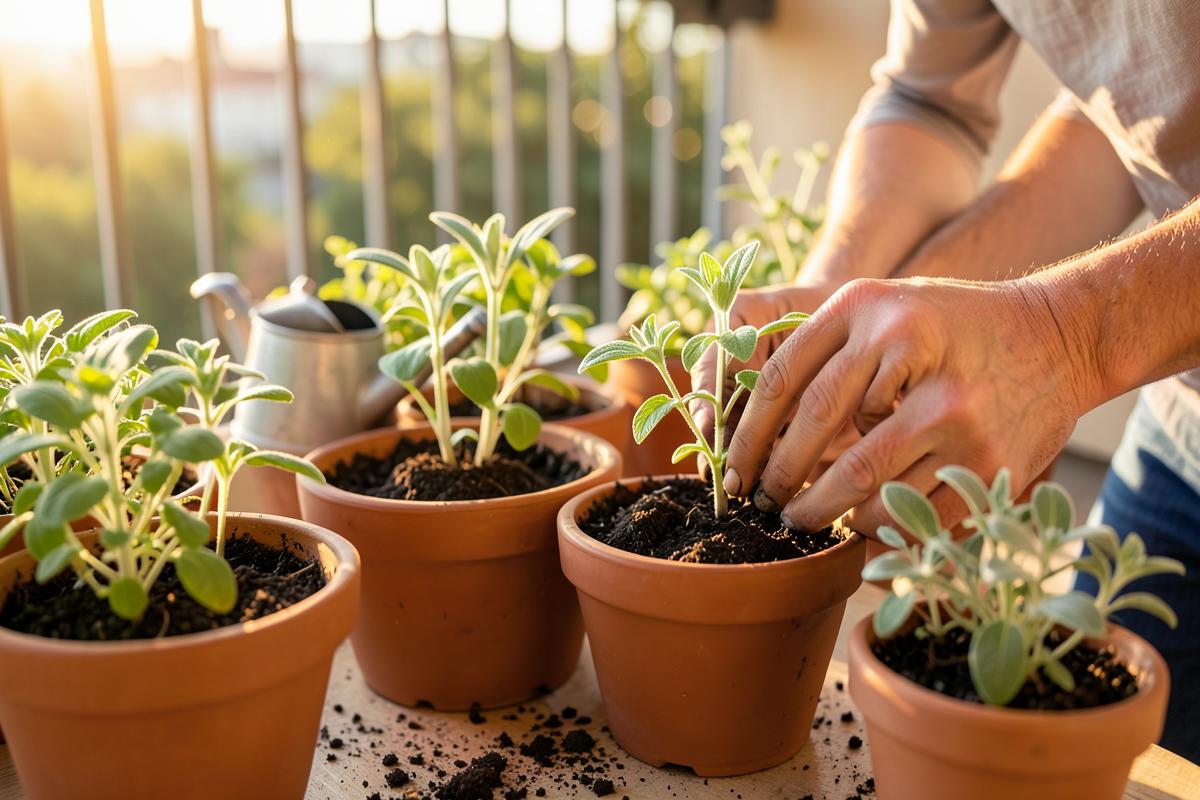
You don't need a garden to grow food. A balcony rail, a sunny step or one wide windowsill is enough for herbs, salad leaves, chillies and even tomatoes. Container growing is also easier to learn on, because you control the soil completely instead of inheriting whatever is in the ground.
The two things that kill container plants are pots that are too small and watering by habit rather than by checking. Get those right and the rest is mostly patience.
What you'll need
- Pots with drainage holes — at least 8 inches across for herbs, 12+ for tomatoes and peppers
- Peat-free potting compost (not soil dug from the ground)
- A watering can with a rose head
- Liquid tomato feed for anything that fruits
- Seedlings from a garden centre for your first season
Work out how much sun you actually get
Before you buy a single plant, watch your space for a day. Note the hours it gets direct sun. Six or more hours means you can grow tomatoes, peppers, courgettes and most herbs. Three to five hours suits salad leaves, spinach, chard, mint and parsley. Less than three hours is a shade garden — grow mint, chives and lettuce and accept that fruiting plants won't fill out.
Nearly every failed first container garden is a sun mismatch, not a skill problem.
Pick pots bigger than you think you need
Small pots dry out in hours on a hot day, and roots that keep hitting hot plastic stop growing. A basil plant is happy in an 8 inch pot; a tomato wants at least a 12 inch pot holding around 5 gallons of compost. Terracotta looks lovely but dries fast — glazed or plastic pots hold moisture longer, which is kinder to beginners.
Every pot must have drainage holes. If it doesn't, drill some. Roots sitting in water rot within days, and the plant looks exactly like it's thirsty while it drowns.
Tip: Skip the gravel 'drainage layer' at the bottom of pots. It does not help drainage — it raises the waterlogged zone closer to the roots. Just use compost.
Five plants that forgive beginners
- 1Salad leaves — sow, cut what you need, and they regrow two or three times.
- 2Bush cherry tomatoes — heavy croppers that don't need much pruning.
- 3Mint — nearly impossible to kill, but keep it in its own pot or it takes over.
- 4Spring onions — grow fast, take almost no room, and can be resown all season.
- 5Chillies — happy in a warm sunny spot and productive from one plant.
Water by finger, not by schedule
Push a finger two inches into the compost. If it's dry at your fingertip, water. If it's damp, wait. In hot weather containers may need water twice a day; in cool weather they may go a week. A schedule ignores the weather, and overwatering kills far more container plants than drought.
When you water, water properly — keep going until it runs out of the drainage holes. A quick splash only wets the top inch and trains roots to stay shallow.
Feed, because pots run out
Compost carries most plants for about six weeks. After that there's nothing left for them to take up. Start a liquid tomato feed every two weeks once flowers appear on anything fruiting — it's high in potassium, which is what makes fruit rather than leaves. Leafy crops like lettuce and spinach need much less; a monthly general feed is plenty.
Keep it going through the season
- 1Pinch out the growing tip of basil to make it bush instead of bolt.
- 2Harvest salad leaves from the outside so the centre keeps producing.
- 3Move pots into shade during a heatwave — they cook faster than ground soil.
- 4Sow a small batch of something every three weeks instead of everything at once.
Common mistakes to avoid
- Buying full-grown plants in tiny pots and never repotting them.
- Watering little and often instead of deeply.
- Using garden soil, which compacts into a brick in a container.
- Growing sun-loving crops in a shady corner and blaming yourself.
Want someone to show you?
A gardener can look at your balcony over video and tell you in five minutes what will actually thrive there. Kindlio has people who do exactly that.


