Beginner Strength Training at Home: The First Eight Weeks
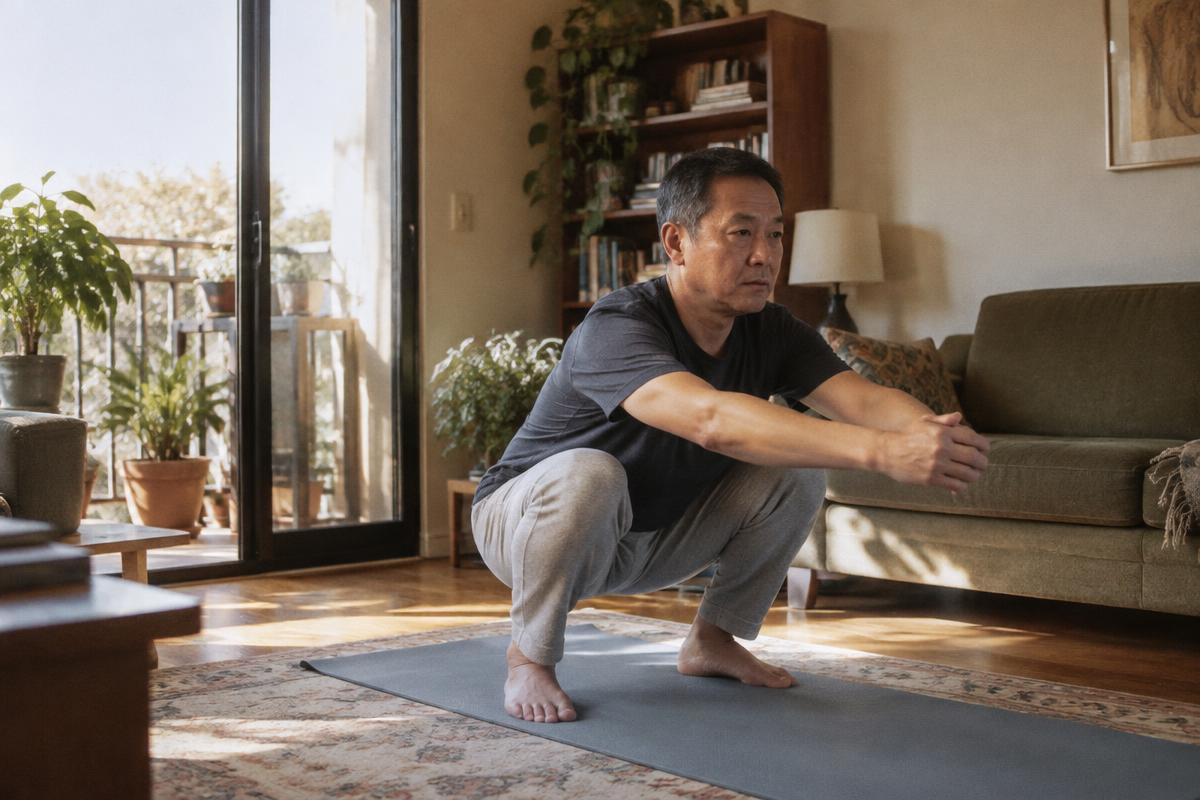
Strength training is the most useful exercise most adults aren't doing. It protects bone density, makes stairs and shopping easier, and helps you keep muscle as you age. You can start it in a living room with no equipment at all.
This is a beginner plan built around five movement patterns, done twice a week for eight weeks. Check with a doctor first if you have an injury, are pregnant, or have a heart condition.
What you'll need
- A mat or carpeted floor
- A sturdy chair
- A wall
- Optional: two light dumbbells or two full water bottles
The five movements that cover everything
Almost every strength exercise is a variation of five patterns. Learn these and you've got a lifetime of exercise to draw on.
- 1Squat — sit-to-stand from a chair. Feet hip-width, weight through mid-foot, chest up.
- 2Hinge — hips back, slight knee bend, flat back. This is how you should lift anything off the floor.
- 3Push — wall press-ups, progressing to a kitchen counter, then the floor.
- 4Pull — bent-over rows with bottles or dumbbells, elbows close to your body.
- 5Carry — pick up two heavy bags and walk. Deceptively effective for core and grip.
Your first eight-week plan
Twice a week, with at least one rest day between sessions. Each session: five minutes of easy movement to warm up, then two rounds of the circuit below, then a few minutes of stretching.
- 1Chair squats — 8 to 12 reps
- 2Wall or counter press-ups — 8 to 12 reps
- 3Hip hinges, holding bottles — 10 reps
- 4Bent-over rows — 10 reps each side
- 5Farmer's carry — 30 seconds
- 6Rest 60 to 90 seconds between rounds
Tip: Finish every set feeling like you could have done two or three more. That's the sweet spot for a beginner — it builds strength while keeping soreness manageable.
How to progress without adding weight
Progress doesn't have to mean heavier. Each week, change exactly one thing: add a rep, add a round, slow the lowering phase to three seconds, or make the movement harder (wall press-up to counter press-up). Changing several at once is how people wake up unable to walk down stairs.
Form cues that prevent most injuries
- 1Squat: knees track over toes, heels stay down, chest stays lifted.
- 2Hinge: the movement happens at the hips, not the lower back. Imagine closing a car door with your backside.
- 3Press-up: body in one straight line, elbows at roughly 45 degrees, not flared out.
- 4Row: shoulders down and back, squeeze the shoulder blades at the top.
- 5Breathe out on the effort. Holding your breath spikes blood pressure.
Soreness, rest and what's normal
Mild soreness for a day or two after a session is normal, especially at first, and it fades as you adapt. Sharp pain during a movement is not — stop and reduce the range or the load. Rest days are when muscle actually rebuilds, so training every day isn't dedication, it's just slower progress.
What eight weeks actually gives you
Expect stairs to feel easier, a heavy shopping bag to feel lighter, and posture to improve before you see much visible change. Strength gains in the first two months are largely your nervous system getting better at recruiting muscle — real, useful, and mostly invisible in a mirror. Keep going.
Common mistakes to avoid
- Starting at four sessions a week and quitting in week three.
- Rounding the lower back on hinges and rows.
- Skipping warm-ups.
- Comparing week one to somebody else's year three.
Want someone to show you?
A trainer watching your squat on video for ten minutes fixes things no article can. Kindlio has coaches who run exactly these sessions.


