Basic Car Maintenance Anyone Can Do in a Driveway
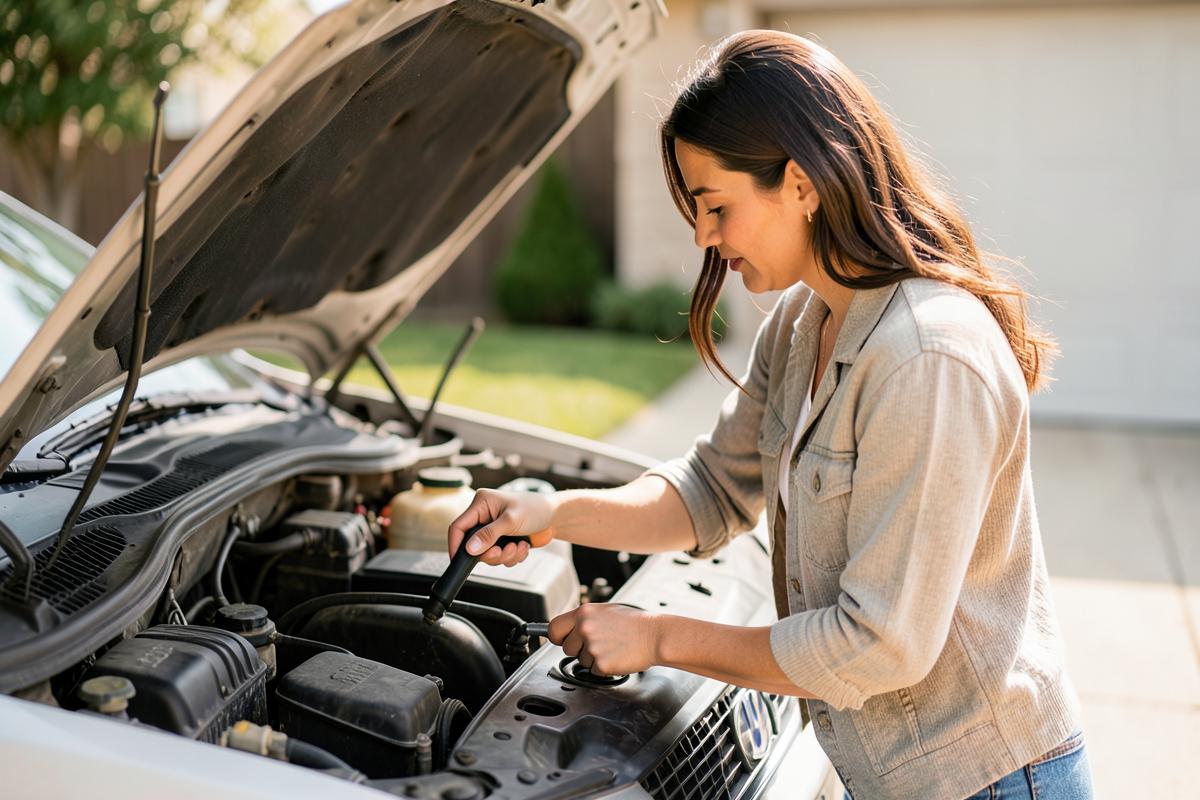
You don't need to be able to rebuild an engine to look after a car. A handful of five-minute checks, done monthly, prevent a large share of breakdowns and catch expensive problems while they're still cheap ones.
None of what follows requires jacking the car up or getting underneath it.
What you'll need
- A clean rag or paper towel
- A tyre pressure gauge
- Your car's owner manual (or a PDF of it on your phone)
- The correct engine oil and screenwash for your car
- A pair of gloves
Check the oil properly
Do this with the engine off and cool, on level ground. Pull the dipstick out, wipe it clean, push it fully back in, then pull it out again — the first reading is always wrong because oil splashes up the stick.
The level should sit between the two marks. Colour matters too: fresh oil is amber, used oil is brown, and milky or gritty oil means stop and get it looked at.
Tip: Top up in small amounts — around half a litre — then re-check. Overfilling can be as damaging as running low.
Set tyre pressures on cold tyres
The correct pressures are printed on a sticker inside the driver's door frame or in the fuel flap — not on the tyre itself, which shows the maximum the tyre can take. Check when the tyres are cold, because driving warms the air and raises the reading.
Underinflated tyres wear on both edges, use more fuel and handle badly in the wet. It's the cheapest safety improvement available to you.
- 1Unscrew the valve cap and press the gauge on squarely.
- 2Compare to the door sticker figure, adding pressure if you're carrying a full load.
- 3Don't forget the spare, if you have one.
- 4While you're down there, check tread depth with a coin and look for cuts or bulges.
Walk round the lights
Turn on the headlights, then have someone stand outside while you cycle through dipped beam, main beam, indicators, brake lights and reverse. No helper? Reverse toward a garage door or shop window at night and use the reflection. A blown bulb is a few pounds and ten minutes; being pulled over for it is neither.
Know your five fluids
- 1Engine oil — checked with the dipstick, as above.
- 2Coolant — check the level in the expansion tank when cold. Never open a hot cap.
- 3Brake fluid — a slowly dropping level often means worn pads; get it inspected.
- 4Screenwash — top up with proper screenwash, not plain water, which freezes and grows bacteria.
- 5Power steering fluid — only if your car has hydraulic steering; many newer cars are electric.
Replace wiper blades in five minutes
Smearing or juddering means the rubber has hardened. Lift the arm away from the glass, press the small tab where the blade meets the arm, slide the old blade off and click the new one on until you hear it lock. Lay a folded towel on the windscreen while you do it — if a bare arm snaps back it can crack the glass.
A simple monthly routine
Pick a date — the first Saturday of the month works well. Oil, tyres, lights, fluids, wipers. Fifteen minutes. Write the date and mileage in a notebook in the glovebox; that record is also worth real money when you sell the car.
Common mistakes to avoid
- Checking oil right after driving, which gives a false low reading.
- Inflating tyres to the number printed on the tyre wall.
- Opening a hot radiator cap — this causes serious burns.
- Ignoring a warning light because the car still drives fine.
Want someone to show you?
Some checks are much easier when someone talks you through them live. Kindlio teachers will join you on video in your driveway.


